February 20, 2026

How BP Delivered the Tangguh LNG Expansion Project with Data-Centric Project Information Management

When capital projects depend on contractor systems, information quality becomes a risk. Large oil & gas developments generate enormous volumes of technical documentation and asset data across multiple EPC contractors and suppliers.

On the original Tangguh LNG project (trains 1 & 2), BP depended on EPC contractors’ systems. This resulted in challenges with:

  • Data accuracy
  • Lack of definitions such as equipment classes
  • Incorrect and duplicate tag numbering

From this experience, BP identified a key element for successfully delivering the Tangguh Expansion Project:

The system must be both document-centric and data-centric — capable of handling, collecting and validating documents and data automatically, while enabling collaborative working across BP, EPC contractors and suppliers.

The Tangguh LNG Expansion Project

The Tangguh Expansion Project in Indonesia included:

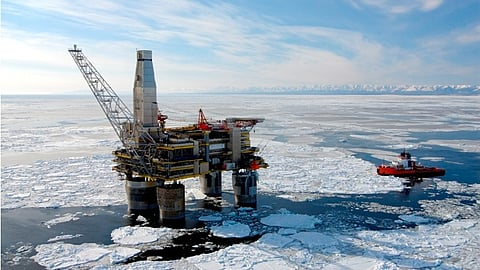
  • Two offshore platforms
  • 13 new production wells
  • A new third LNG liquefaction train rated at 3.8 MTPA (a capacity increase of ~50%)
  • Gas pre-treatment and processing
  • A new LNG jetty with expanded loading facilities

The project had a CAPEX of approximately $8 billion USD and delivered its first LNG cargo in October 2023.

From FEED in 2014 through start-up in 2023, the project generated:

  • 102,519 unique engineering and supplier documents
  • 288,646 document revisions
  • 170,812 tagged equipment items
  • 7,650,321 data attributes collected
  • 391 suppliers
  • 825 purchase orders
  • 893 workspace users

Managing this volume of information across seven EPC contractors required more than traditional document control.

Defining the Requirements for a Data-Centric Platform

BP defined that the required system must:

  • Be proven in similar heavy and complex industries
  • Handle both documents and asset data
  • Include Reference Data Library / class library capability
  • Use automation to minimize high-volume, low-value tasks
  • Include automated checking and validation to improve quality
  • Be scalable across the lifecycle from early design through operations
  • Report on information quality and completeness against defined milestones
  • Assign tags aligned with the existing engineering numbering system while preventing duplicates
  • Provide global 24-hour access to the latest information

Following successful use on the BP Quad 204 project, the Sharecat platform met all defined requirements and was selected and implemented.

One Workspace Across the Full Lifecycle

The Sharecat platform was used from early phase design (FEED), through detail design and execution, construction and commissioning, and into start-up and early operations.

The platform functionality included:

  • Document management, workflows and reviews
  • Asset data and equipment registers
  • Reference Data Library / class library management
  • Automated tag and document numbering
  • Product catalogue
  • Reporting and analytics

A single workspace supported the entire project from 2014 to 2023, including running a competitive FEED with two EPC consortia in full segregation.

Measurable Impact

BP summarised their experience as follows:

“In my experience most solutions normally struggle to meet expectations and demands of users, but from the moment I first came across Sharecat it frankly blew my mind. When comparing the value provided to the cost spent, the Sharecat platform definitely has been a very good investment for us.”
— Dodi Jatikusuma, Project Information Management Manager – BP Tangguh LNG

Key benefits identified included:

  • Approximately $2 million (USD) direct saving in the EPC contract, as EPC contractors did not need to provide their own central document and tag/data management tools
  • Improved EPC understanding of BP’s information requirements, leading to higher quality handover earlier
  • Automated distribution of the latest BP specifications with full audit trail, avoiding disputes and change orders for “missing information”
  • Integrated reporting and analytics providing real-time status for all parties
  • Significant reduction in document control effort and cost through automation
  • Efficient transfer of interface-critical information between EPC contractors
  • Staged handover to operations via eight predefined “ready for start-up” milestones
  • High-quality structured data loaded into operations systems without major data processing and clean-up costs
  • Controlled access in accordance with BP’s confidentiality and information classification requirements, executed with zero digital security incidents

Enabling Operational Readiness from Day One

Because asset data was structured and validated during project execution:

  • The Reliability & Maintenance team began designing the maintenance program early
  • Quality issues were detected and corrected before start-up
  • Class library definitions were exported to configure the operations system

This enabled seamless interaction between project and operations teams and supported staged start-ups alongside the live trains 1 & 2 facility.

Resilience During COVID-19

During execution, the COVID-19 pandemic required the construction team at site to reduce from approximately 10,000 to fewer than 2,000 personnel.

As a cloud-based SaaS solution, the Sharecat platform enabled the project to transition to remote working without suspension of detail engineering design, commissioning or construction activities.

“Without Sharecat being a cloud-based system we would have been unlikely to be able to continue with detail engineering design, commissioning and construction activities during the COVID restrictions.”
— Dodi Jatikusuma, BP

A Technology Foundation for Future Projects

The success of the Tangguh Expansion Project has resulted in BP continuing to use Sharecat for the new UCC project at Tangguh, aimed at reducing carbon emissions through offshore CO₂ injection while enhancing gas recovery.

Conclusion

The Tangguh LNG Expansion Project demonstrates that managing capital projects at scale requires more than document control.

It requires:

  • Structured asset data
  • Automated validation
  • Lifecycle continuity
  • Global collaboration
  • Information quality reporting
  • Secure, cloud-based access

By combining document management and data management within a single scalable platform, Sharecat enabled BP to deliver an $8 billion LNG expansion with controlled information, measurable cost savings, and seamless transition into operations.

Download the full insight

Access the complete project overview, including detailed scope, lifecycle phases, platform functionality and measurable results from FEED through start-up.

Related insights

Let's talk!

A member of our team will be in touch soon.

Thank you! Your submission has been received!
Oops! Something went wrong while submitting the form.
By clicking “Submit” you agree to our TOS and Privacy Policy.
Looking for technical and product support? Click here.