

Book a demo
Login

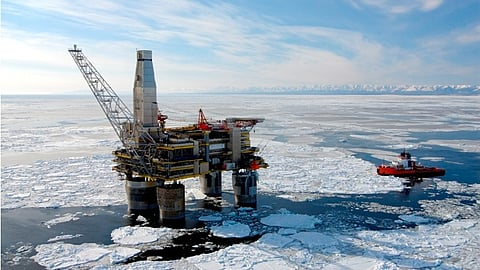
Sakhalin Phase II developed fields approximately 16 km off the north-eastern coast of Sakhalin Island to deliver gas to the LNG plant developed in the previous phase, including two self-contained drilling, production, utilities and quarters platforms — Lunskoye-A (22,000 tonnes topsides) and Piltun-Astokhskoye (28,000 tonnes topsides) — the first offshore project in Russia.
Total project CAPEX was approximately $9.6 billion USD, with execution from 2003 to 2008. The Sharecat platform was used from 2003 to 2012 across AMEC, Samsung Heavy Industries and Shell.
The Jasmine project drew on the full breadth of the Sharecat platform — from supplier document workflows through to automated tag and document numbering, with reporting threaded across the lifecycle.

Collecting and efficiently distributing data and information is always the most difficult part of any information gathering process, and also an area with potential for major improvement.
On Sakhalin Phase II, the team faced unprecedented information volume across two offshore platforms, 90+ main equipment suppliers and Russia's first offshore project. Poor handling of supplier information had historically been a key cause of schedule and budget overruns on mega projects of this scale.
AMEC and Shell needed a way to collect, validate and approve data and documents across engineering project offices, fabrication contractors, suppliers and the owner/operator — without repeating the inefficiencies of earlier offshore developments.
The Sharecat platform was applied as a single common solution across all parties. By extending one platform end-to-end, the project removed silos between engineering, supply chain and operations and enabled collaboration at mega-project scale.
Sakhalin II made comprehensive use of the Sharecat platform — from supplier documents and asset data through the product catalogue, SPIR handling and reporting at mega-project scale.
Close to 100% handover of engineering and supplier information across the $9.6B development.
Talk to us about supplier information management on EPC programmes — from kick-off through to operational handover.


ISO
27001
Certified


